Bitcoin Led, Bonds Fell, and the Fed Finally Hiked
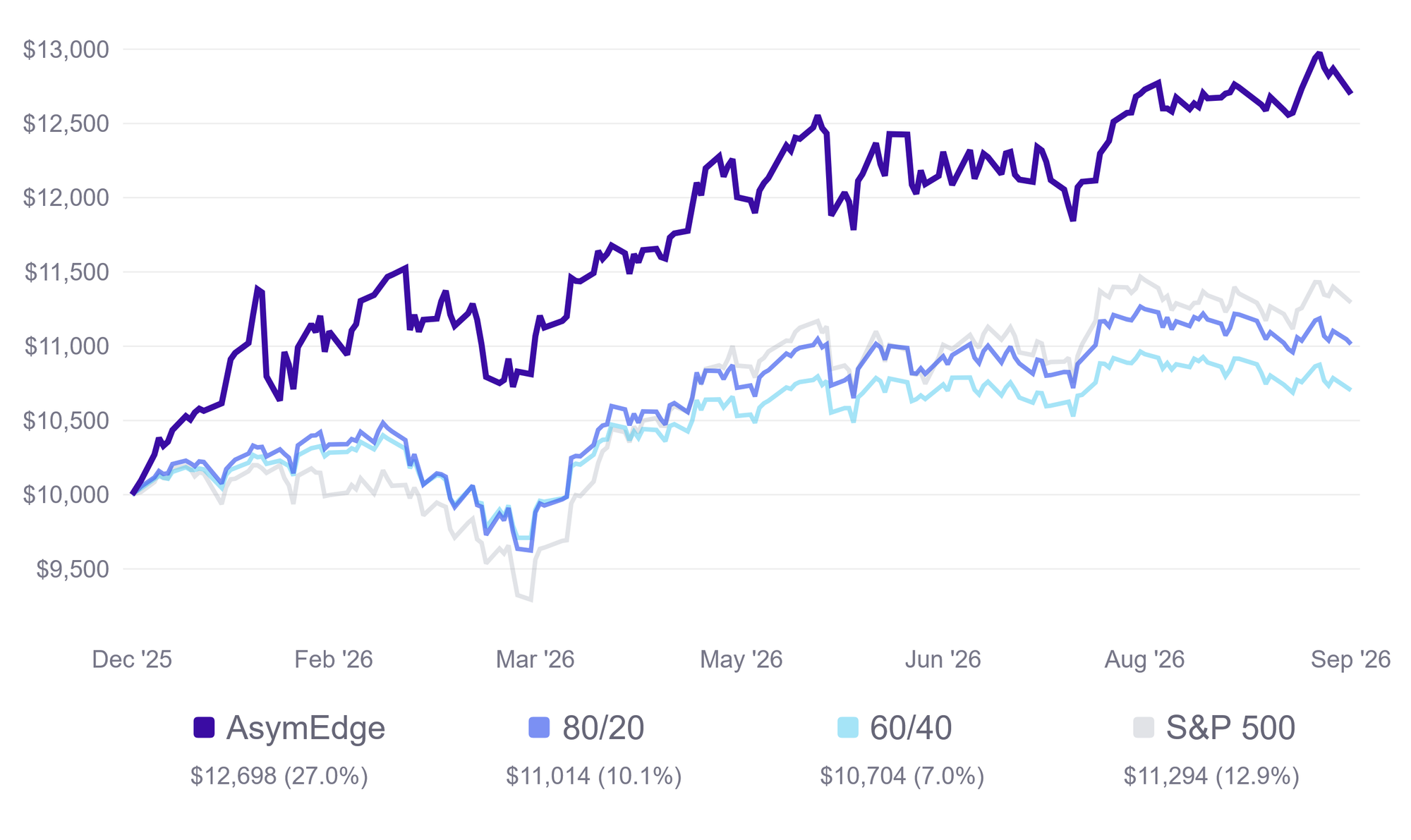
Bitcoin led the ETFs I track in September. The Fed raised rates for the first time since 2023, and the 10-year Treasury yield reached a 19-year high. My strategy is up 26.98% year-to-date, compared with 10.14% for the 80/20 benchmark. One position changes for October.


My October portfolio allocations are in the paid second half of this update. The strategy is up 26.98% for the year, against 10.14% for the 80/20 benchmark, and one major position changes for October. This issue is a quick look at that change, plus a few notes on what moved markets in September.
📌 This newsletter explains how I invest my own money, using a simple portfolio of four ETFs. The aim is to match a traditional balanced portfolio with shallower drawdowns. I share what I hold and why, so you can watch it play out.
September MTD: Asymmetric Edge +0.19% vs. 80/20 (AOA) −1.23%, S&P 500 −0.12%
YTD: Asymmetric Edge +26.98% vs. 80/20 (AOA) +10.14%, S&P 500 +12.94%
YTD outperformance: +16.8 pp vs. 80/20, +14.0 pp vs. S&P 500
Quick Take
The strategy held up well in what was a tough month for many assets, especially bonds. My portfolio returned 0.19% through September 29, while the 80/20 benchmark fell 1.23% and the S&P 500 slipped 0.12%. Bitcoin and emerging markets did the lifting, while Japan and active commodities gave a little back.
Year-to-date, $10,000 invested in the strategy on January 1 would be worth approximately $12,698 as of September 29. The same $10,000 in the 80/20 benchmark would be worth approximately $11,014.
Year-to-Date Growth of $10,000
Year-to-Date Asset Class Returns
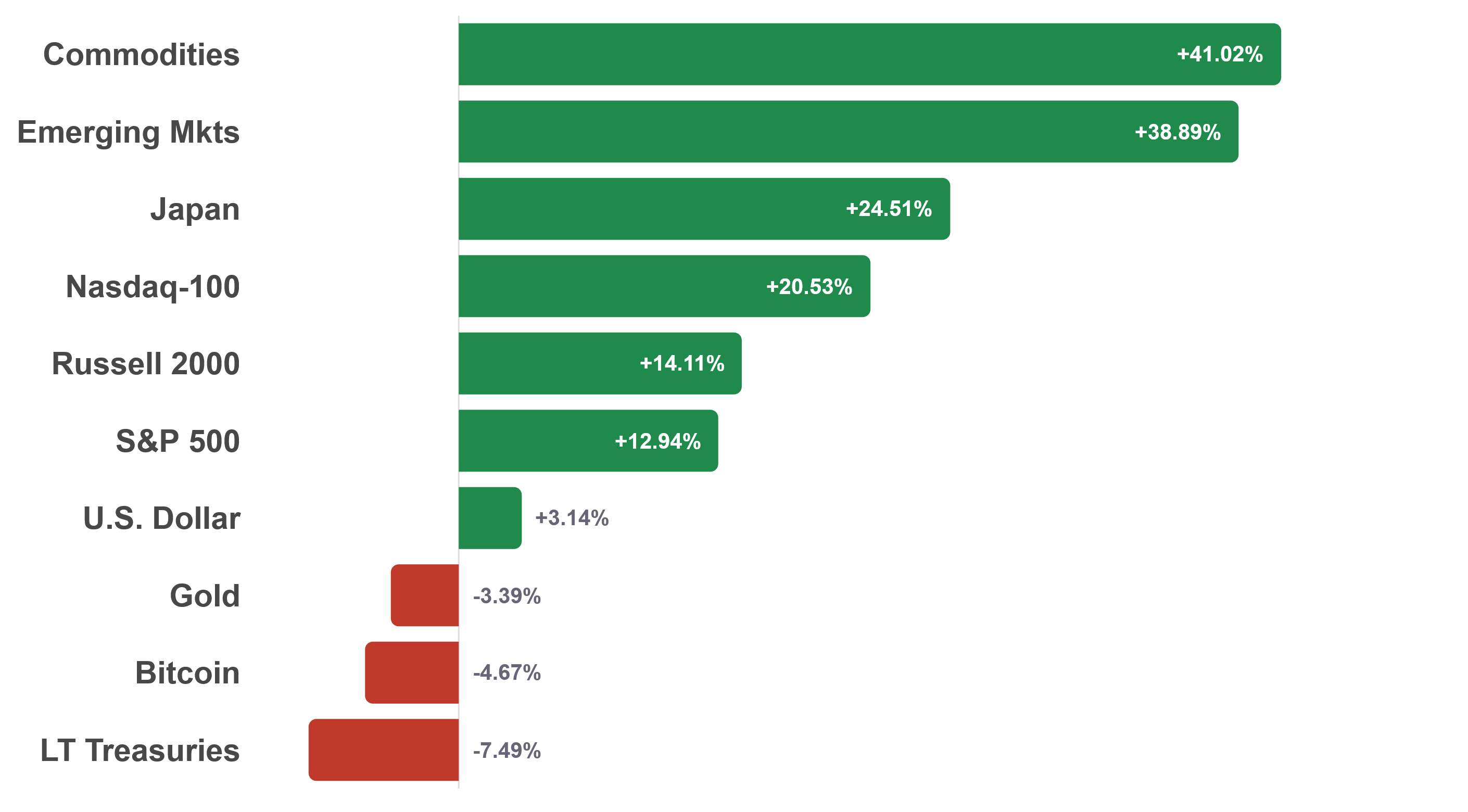
Commodities have led this year, with emerging markets close behind. Gold is now below where it started 2026, and long-term Treasuries have the weakest return on the chart.
Brief Market Commentary
The Fed hiked as long-term rates climbed. Policymakers voted 12-0 on September 16 for the first rate hike since 2023, to 3.75% to 4.00%. By September 28 the 10-year Treasury yield had passed 5.2%, its highest in about 19 years. That increases credit card rates, which follow the Fed, and mortgage rates, which track the 10-year yield.
Bonds offered no cushion. Long-term Treasuries (TLT), a fund of U.S. government bonds maturing 20+ years out, fell 4.84% in September, since bond prices drop when yields rise. The 80/20 benchmark (80% stocks, 20% bonds) lost 1.23% and the 60/40 lost 1.45%, while the S&P 500 dipped only 0.12%.
Bitcoin had a strong first month back. Bitcoin (IBIT) returned 5.95% in September, the best of the ETFs I track (remember how I was hesitant to buy Bitcoin last month?). Spot Bitcoin ETFs drew $2.39 billion in the week ending September 25, the most since October 2025. Bitcoin remains about a third below its October 2025 peak.
Energy pushed inflation higher. Consumer prices rose 3.4% from a year earlier in August, with energy up 16.3% and gasoline up 27.4%. Employers added 162,000 jobs against roughly 53,000 expected, and unemployment was 4.1%. That helps explain the hike. The Fed raises rates to slow spending and hiring, which eases pressure on prices (at least that's the idea).
What I'm Watching
The Fed meets again October 27 and 28. As of September 28, futures markets priced roughly a 70% chance of a second hike. Oil is the other swing factor. Brent crude topped $100 in September and was near $106 on September 28, after President Trump rejected Iran's proposal to reopen the Strait of Hormuz.
If higher rates or oil prices change the rankings, the strategy will adapt per usual and shift into the asset classes with the strongest momentum.
Below for paid members:
- The four ETFs I'm holding for October, with exact weights
- The one major holding that exits, and what takes its place
- How holdings shifted from the start of September